Disclosure: This article may contain affiliate links, which means I may earn a small commission at no extra cost to you. Thank you for helping me keep this blog going! 💛
As a Moroccan who grew up in France and used to travel to Morocco by car, my trips were always about one thing: visiting my family. There was one challenge? My relatives are scattered all over the country.
Back then, the train was my best option for transport (occasionally a grand taxi or coach); it was the easiest way to travel from one city to another, especially since I didn’t even have a driving licence.
But life changes. One day, I came back with my own family, and everything looked different. With two young children and a husband behind the wheel, renting a car suddenly made perfect sense.
It gave us the freedom to go wherever we wanted, whether it was for a short or long distance. And, if I’m being honest, the best part was not having to drag a heavy suitcase up the train steps!
That first trip changed the way we travel in Morocco. Renting a car not only gave us comfort and flexibility, but it also taught us a few lessons about driving here, from road rules, speeding fines, to parking and safety.
If you’re planning to rent a car in Morocco, you’ll find it’s one of the best ways to explore the country. Still, there are a few things to know before you get behind the wheel.
Should You Rent a Car in Morocco?
Deciding whether to rent a car in Morocco depends on your travel style, your destinations, and the kind of experience you want. While public transport like trains, buses, and grand taxis is reliable in many parts of the country, having your own car opens up a level of freedom that’s hard to beat. Let’s break it down.
When is it worth renting a car?
Exploring Smaller Towns and Off the Beaten Path
Many of Morocco’s hidden gems are not easily accessible by public transport. Towns like Chefchaouen, Ifrane, or the villages around the Atlas Mountains often require a combination of buses and taxis. But with a car, you can stop wherever you want, explore small villages, and discover scenic spots without relying on schedules.
Flexibility With Time
Trains and buses run on fixed schedules, which can be limiting if you want to start your day early, stay longer in a place or if one of the children isn’t feeling well. Renting a car gives you complete control over your itinerary, letting you leave when you want, take detours, and even extend stops if you see something interesting.
Comfort and Convenience
Travelling by car, especially with luggage or children, is much more comfortable than train or bus. You don’t have to carry heavy bags through crowded stations, lift heavy suitcases up the wagon’s stairs, wait for departures, or share your space with strangers.
And most importantly, you are guaranteed a seat. I remember the crowd always rushing to get into the train carriage because more tickets than seats were sold. Privacy, comfort, and the ability to play your own podcasts or audiobooks make the journey part of the experience.
Car Road Trips and Scenic Drives
Some of Morocco’s most iconic experiences, like driving through the Atlas Mountains, the Dades Gorges, or the coastal roads near Essaouira, are only possible with a car. These drives offer flexibility for photography stops, quick detours, and spontaneous adventures that buses and trains can’t accommodate.
Visiting Multiple Cities in One Trip by Car
If your trip covers several cities, like Tangier, Fes, and Marrakech, a car allows you to manage your own pace. You won’t be bound by train departure times or forced to take indirect routes. For multi-city trips, renting a car often saves time and stress.
When it’s not worth renting a car
If You’re Staying in Big Cities Only
In cities like Marrakech and Casablanca, traffic is chaotic and stressful. Parking is difficult, and taxis are cheap if you know the prices and don’t fall for the scammers. For city stays, public transport or taxi apps (like Careem or Indrive) are much easier, but take your precautions and use common sense as they’re not regulated.
The first time we rented a car was in Marrakech, and we had two problems. We couldn’t park outside our location when we came back to Marrakech because the street was simply too narrow. And this led to another problem; when the car was outside overnight, we found it scratched one morning. It looked like cats tried to climb the car.
If You’re on a Tight Budget
While car rental prices have dropped and fuel and tolls are cheaper than in Europe, Deposits and other extras you want (like car seats) can add up quickly, especially if you encounter problems like cats scratching the car and arguing your way out of paying an excess of £1000!
Using trains, coaches, and shared taxis is cheaper, just not as comfortable or flexible.
If You’re Nervous About Local Driving
Driving styles in Morocco are unpredictable, especially in busy intersections or roundabouts. The highway code is not always respected. Many still use their phone while driving. A pedestrian will cross in front of you anytime, anywhere. I’ve seen worse, but if that stresses you out, consider hiring a driver or using other transportation for intercity travel.
Where to Rent a Car?
You can rent a car almost anywhere in Morocco, at airports, in big cities, and through local agencies.
Airports
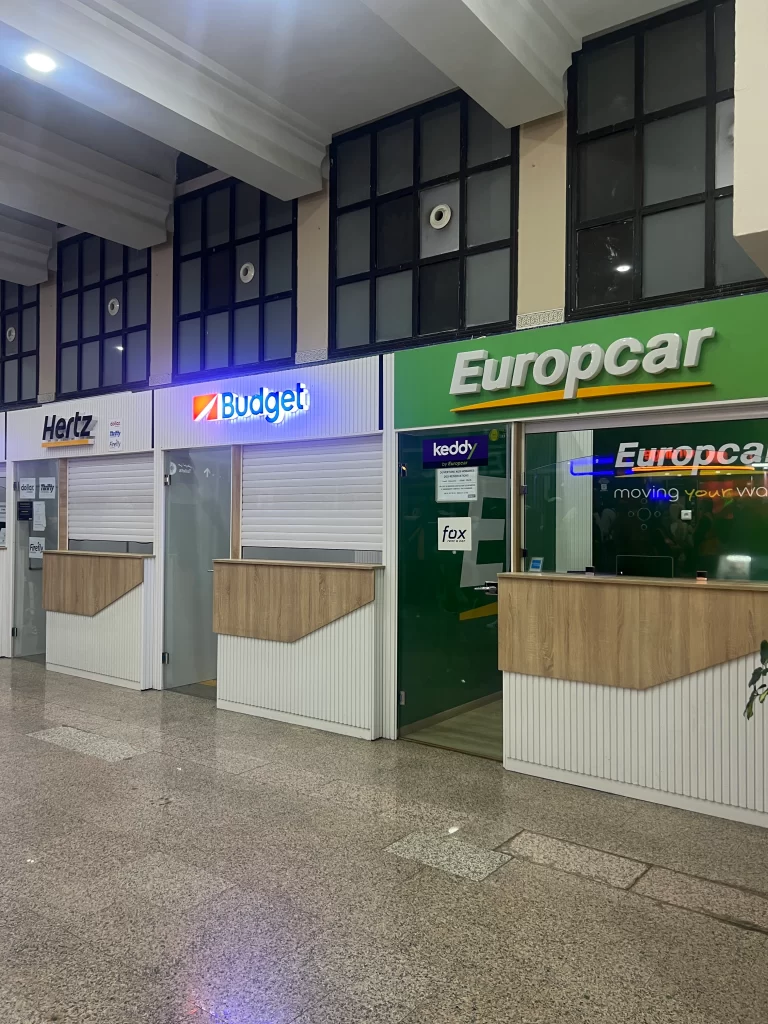
Casablanca, Marrakech, Tangier, and Fes all have car rental desks from companies like Hertz, Europcar, Sixt, and AirCar. Booking online in advance (check prices here) usually gets you the best deal and insurance options.
City agencies
If you’re staying a few days before hitting the road, renting from a local agency in town can be cheaper. You have more opportunities to bargain with them. Just read reviews and inspect the car carefully before driving off.
Tip: For trips during international events, book early; rentals between Tangier, Casablanca, and Marrakech go fast during major events.
Requirements for Renting a Car in Morocco
Before you book, make sure you meet the main car rental requirements in Morocco. Most agencies have similar rules, but conditions could vary slightly between international companies and local car hire companies.
Age Requirement
To rent a car in Morocco, you must be at least 21 years old.
Some agencies may require you to be 23 or 25, especially for SUVs or premium models. Drivers under 25 and seniors over 65 might still be able to rent these, but they’ll need to pay a fee, so it’s worth checking before booking.
Driving Licence
You’ll need a valid driving licence from your home country.
If it’s not written in French or English, you should bring an International Driving Permit (IDP), which serves as a translation and avoids any misunderstanding with local police or agencies.
Most companies require you to have held your licence for at least one year. For certain vehicles, you must have held your driving license for 3 years.
Tip: You can easily compare rental prices across major cities, from Tangier to Marrakech, using DiscoverCars. These platforms show the best local and international deals, often with free cancellation.
Passport or National ID
A passport (for visitors) or CIN (for Moroccan residents) is mandatory to complete the rental contract.
Make sure the driver’s name matches the one on the booking and the credit card used for the deposit.
Credit Card and Deposit
Most companies in Morocco ( including Hertz, AirCar… ) require a credit card (with enough funds) in the main driver’s name for the security deposit.
Expect the hold to range between €500 and €1500, depending on the vehicle and insurance coverage.
Some local car rental agencies accept cash or debit cards, but these are exceptions, so always confirm in advance. Always read the conditions before booking.
Car Insurance
By law, all rental cars in Morocco include basic third-party insurance.
However, it’s better to add full coverage, which protects you from paying for scratches, minor damage, or theft.
It’s a small upgrade that saves big headaches, especially if you’re driving through mountain roads or city traffic. Trust me, minor damages happen easily!
Quick Recap Checklist
Minimum age: 21+ (some 23–25)
Licence: 1+ year held, IDP if not in English/French (3+ years held depending on the vehicle)
ID: Passport or Moroccan CIN
Credit card: For deposit (€500–€1500)
Insurance: Upgrade to full coverage recommended
What Does It Cost to Rent a Car?
The cost of renting a car in Morocco depends on several factors: the season, city, vehicle type, and insurance options. But overall, it’s still much cheaper than in most European countries, so it’s a great value for exploring the country on your own schedule.
Marrakech has the cheapest rates, while surprisingly, Nador isn’t a top tourist place, but has the most expensive ones. You get it, the more touristy a city is, the more competition, hence lower prices.
Also, July and August are the most expensive months, while March is the cheapest month of the year to hire a car.
The average price is £7, but as we said above, it depends on when, where and which car you want to rent.
Fuel Prices
Fuel in Morocco is much cheaper than in Western Europe:
- Petrol (Essence): around 15–17 MAD per litre
- Diesel (Gasoil): around 13–15 MAD per litre
Most stations accept cash or card, and you’ll find plenty along highways and major roads. Always keep small change if you’re driving in rural areas, as some local stations may only accept cash. Cash is still widely used in Morocco.
Tolls and Road Costs
Highways (autoroutes) in Morocco are modern and safe, but they’re not free.
Expect to pay 60–200 MAD (around €6–€20) between major cities like Casablanca–Marrakech or Tangier–Fes.
You can pay in cash at toll booths.
Car Deposits and Extras
Rental companies will block a security deposit on your credit card (usually €500–€1500) during your rental. This is released within 30 days if you return the car in good condition.
Optional extras (GPS, child seat, Wi-Fi hotspot) usually cost €5–€10 per day each, depending on the company.
Money-Saving Tips
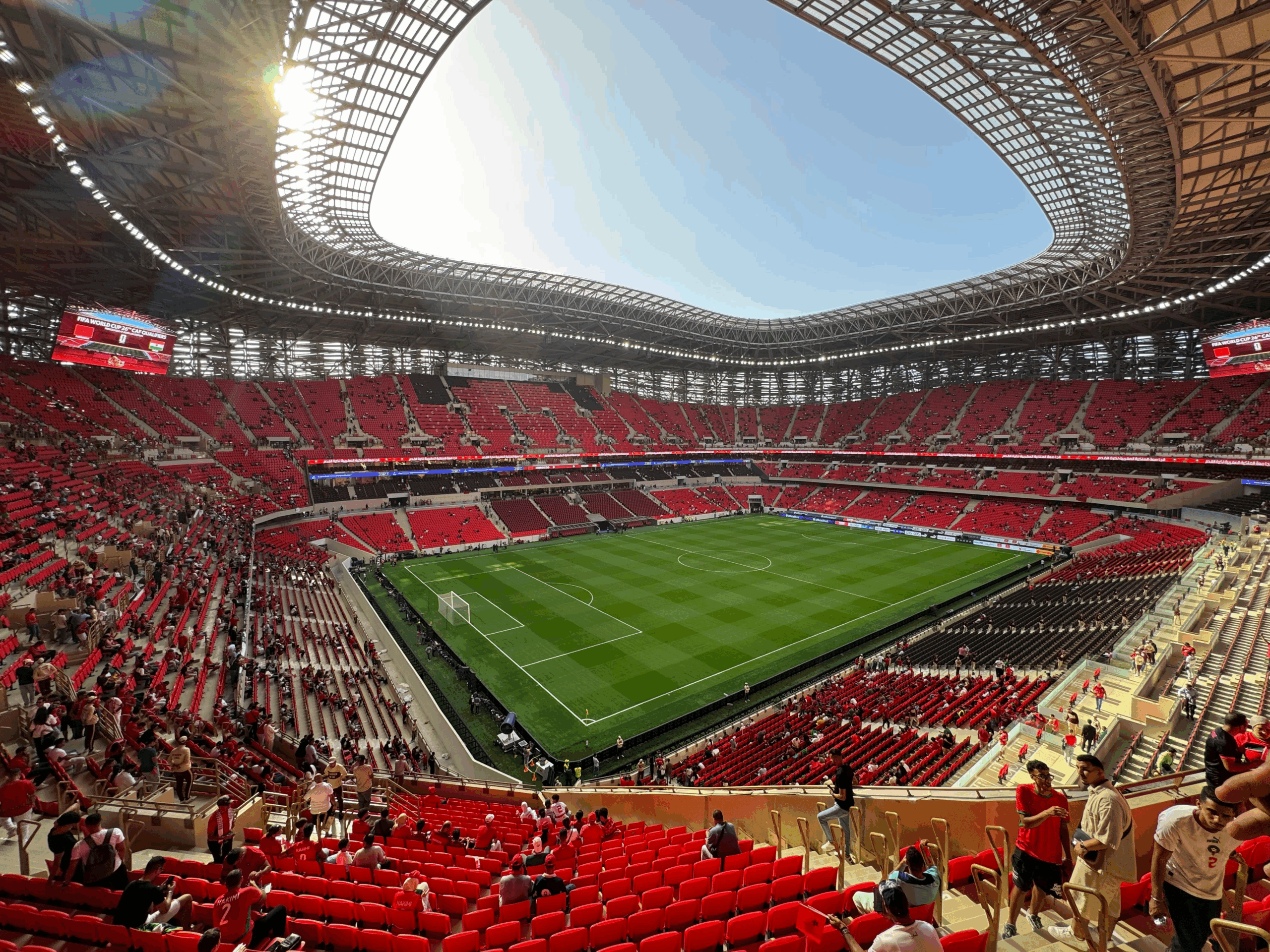
- Book online early, especially in summer or during events like CAF 2025, when car demand is high.
- Check mileage limits; most rentals include unlimited mileage, but some local agencies don’t.
- Return with a full tank to avoid refuelling fees.
Renting a car in Morocco can fit nearly any budget, like everything else.
If you plan smartly, book online, compare options, and add full insurance, you’ll get the freedom to explore at a good price.

DiscoverCars.com has a very informative page about driving in Morocco, including company ratings and customer reviews with photos.
Driving in Morocco: What to Expect?
Driving in Morocco is one of the best ways to truly experience the country. You can stop whenever you like, for mint tea, a view of the Atlas Mountains, or a quick detour to a seaside village. But before hitting the road, it’s good to know what to expect from local traffic, road conditions, and driving habits.
Are Moroccan Roads in Good Condition?
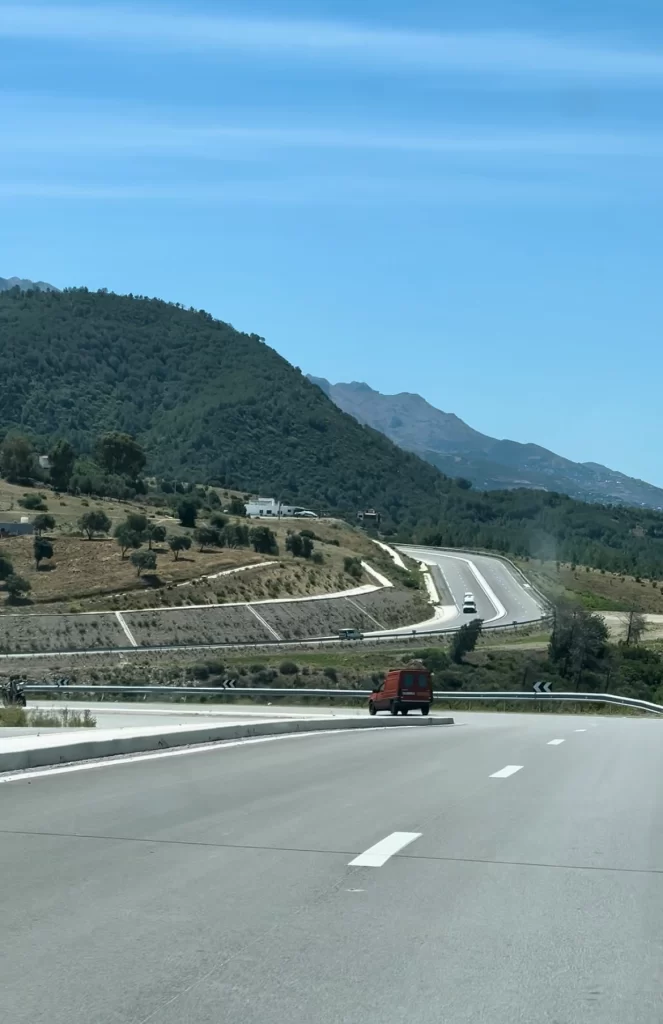
Most highways in Morocco ( especially between Tangier, Rabat, Casablanca, and Marrakech ) are modern, well-paved, and clearly signposted.
Rural and mountain roads, like those leading to Chefchaouen or the Atlas villages, can be narrower, steep, winding and sometimes damaged or unfinished, but they’re generally safe if you drive carefully and during daylight hours. The scenery will be worth it.
Google Maps isn’t the most reliable in Morocco and can be misleading, so I would never drive at night, especially in places I don’t know. I have seen drivers wreck their cars from following Google maps took them via a road with rocks in the middle of it!
We nearly hit a dog driving down hills at night once. So, Animal Crossing is another thing to be aware of. Dogs, cats, wild boars, but also sheep, donkeys, cows, and camels. They are all part of the daily driving experience here.
Is Driving a Car in Moroccan Cities Difficult?
Moroccan drivers can be assertive, especially in big cities like Casablanca or Marrakech. Expect:
- Sudden lane changes or turns without signals
- Driving in the wrong lane on roundabouts
- Pedestrians crossing anywhere (not just at crossings)
- Motorbikes weaving between cars
- Dense traffic
It may seem chaotic at first, but it becomes intuitive once you get used to it.
In Rabat and Tetouan, drivers are generally calm and respectful and follow the rules. On highways, stick to the right lane unless overtaking, and keep an eye out for slow trucks or donkeys near rural towns.
Remember, in Morocco, we drive on the right-hand side!
What Are the Speed Limits in Morocco?
Speed limits are clearly posted but change frequently between towns and open roads:
- 60 km/h → inside towns and cities
- 80–100 km/h → on rural or national roads
- 120 km/h → on highways (autoroutes)
There are many fixed and mobile speed cameras, and they are everywhere and anywhere. The traffic police have a way to surprise you in the least expected places.
If you’re caught speeding, you will be stopped by roadside police and asked to pay a small on-the-spot fine (usually around 150–300 MAD). They’ll issue an official receipt; never pay without one.
We got many speeding fines in Morocco, and there is no escaping them. The police officer told us once that they are very lenient with tourists except for the speed limit. And it’s true, we’ve talked our way out of paying excess fees on a car, the car being towed for parking the opposite way of the traffic and others, but they never for speeding.
Pro tip: As you leave each town, keep an eye on the first speed limit sign; it’s common for drivers to get fined for accelerating too early.
Police Checkpoints
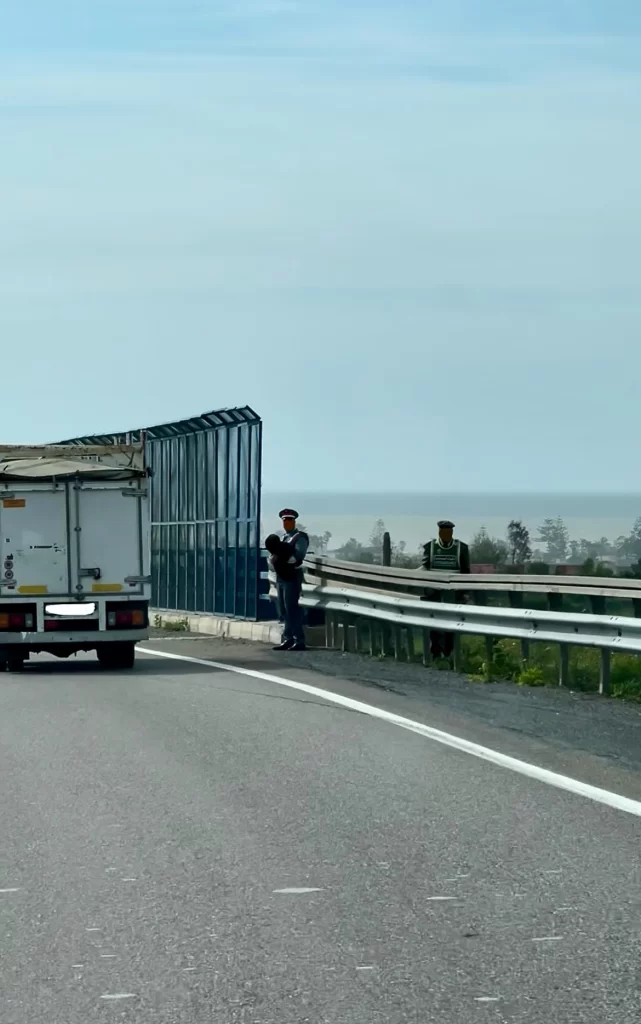
If you’re planning to drive in Morocco, you’ll quickly notice a strong police presence on the roads, from officers at roundabouts to checkpoints between cities. This may surprise you, but it’s actually part of Morocco’s commitment to road safety.
In most large cities, especially Tangier, Rabat, Casablanca, and Marrakech, you’ll find police officers stationed at major roundabouts, intersections, and city gates.
You’ll encounter road checkpoints (contrôles de gendarmerie) at the entrances and exits of many towns, at tolls and sometimes along highways.
These are not random; they’re meant to ensure safety and vehicle compliance. Once, we noticed an unusually high presence between Rabat and Casablanca; there were officers at each bridge we passed. We found out later that the King was travelling that day.
If an officer signals for you to stop, pull over calmly and wait for them to approach. They’ll usually ask for your driver’s licence, passport, and rental contract (including insurance). Make sure you always have your papers with you when you drive.
Tip: Always stay polite, use French or simple Arabic (“Bonjour, kidayr?”), and avoid arguing. Most checks are quick and friendly. Most of the time, they’ll let you go as soon as they see your foreign passport.

Where Can You Park and Refuel?
Finding parking and fuel in Morocco is generally easy and affordable, whether you’re exploring a busy city like Casablanca or Marrakech, or driving along the coast near Essaouira or Tangier.
Parking
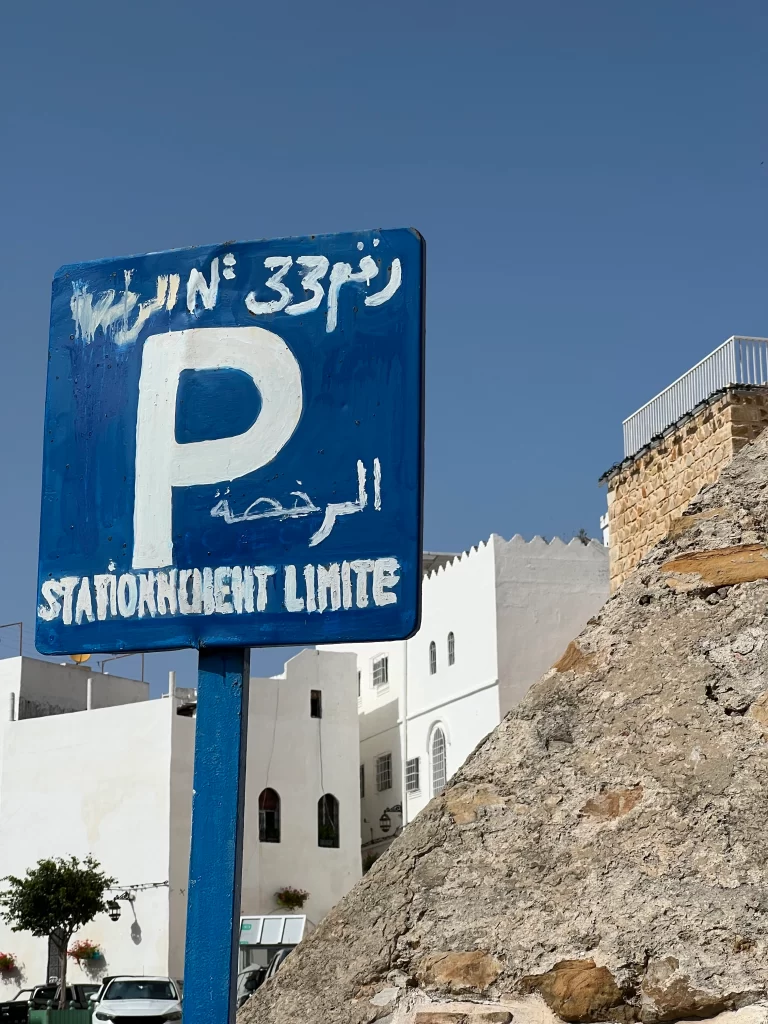
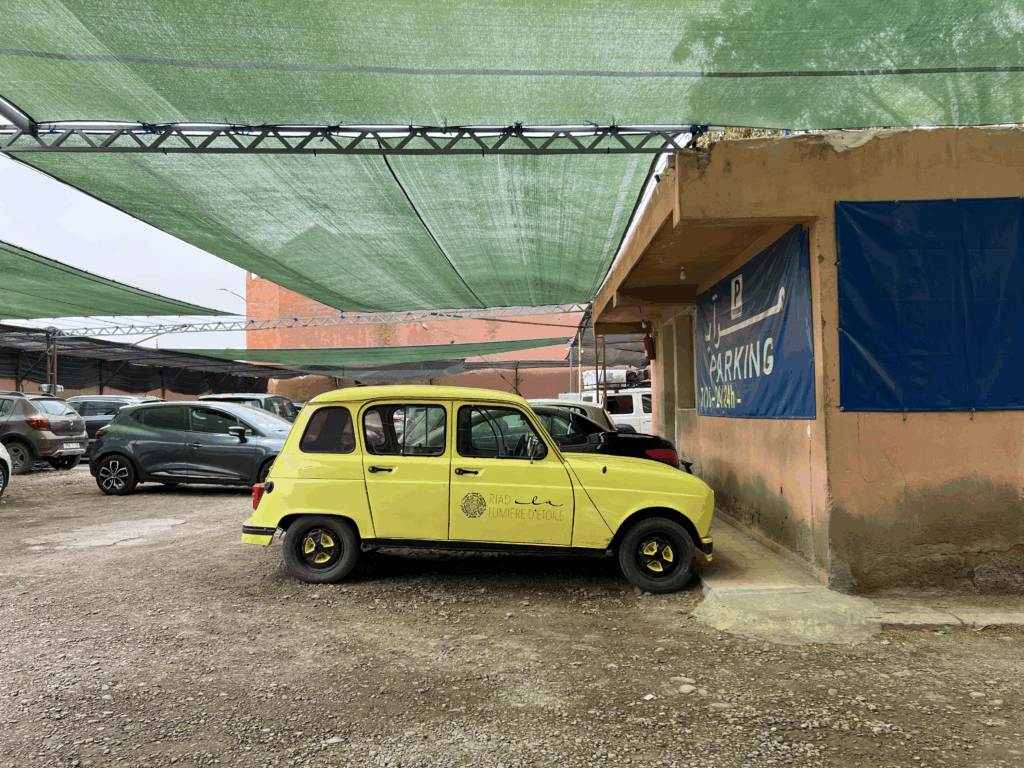
Parking isn’t really regulated in Morocco, so it’s the kind of place where you can park anywhere unless a policeman asks you to move.
In most towns and cities, parking spaces are watched over by attendants called “gardiens de voiture.” You’ll spot them wearing fluorescent vests.
They’ll guide you into the tight parking space, keep an eye on your car while you’re away and even add cardboard on your front window if your car is in the sun.
Tipping: Leave 2–3 MAD when you leave. It’s a normal part of local etiquette.
Parking is generally safe, but theft can happen. As everywhere, avoid leaving valuables in plain sight or even in the car. Try to keep your car in the hotel’s underground parking or a secured car park overnight (ask for prices first!).
Tip: Be very careful where you park. The sidewalks are very high! The first time I opened the car door, I scraped it along the sidewalk! Make sure you don’t park too close and check before opening the door.
Refuelling and Service Stations
Fuel stations are easy to find across Morocco. Major chains include Afriquia, Shell, and TotalEnergies. You’ll find them along highways, near city exits, supermarkets and in the city.
How to fill up: You don’t leave your car; attendants will fill your tank for you. You tell them how much you want to spend in dirhams. It would be useful to learn numbers in Darija. While you go to pay, the attendant will probably clean your window (leave them a tip). Make sure you indicate to them the correct fuel you want.
Fuel prices fluctuate weekly, but they’re still cheaper than in most European countries.
As of 2025, expect:
- Diesel: around 13–14 MAD/litre
- Unleaded petrol: around 14–15 MAD/litre
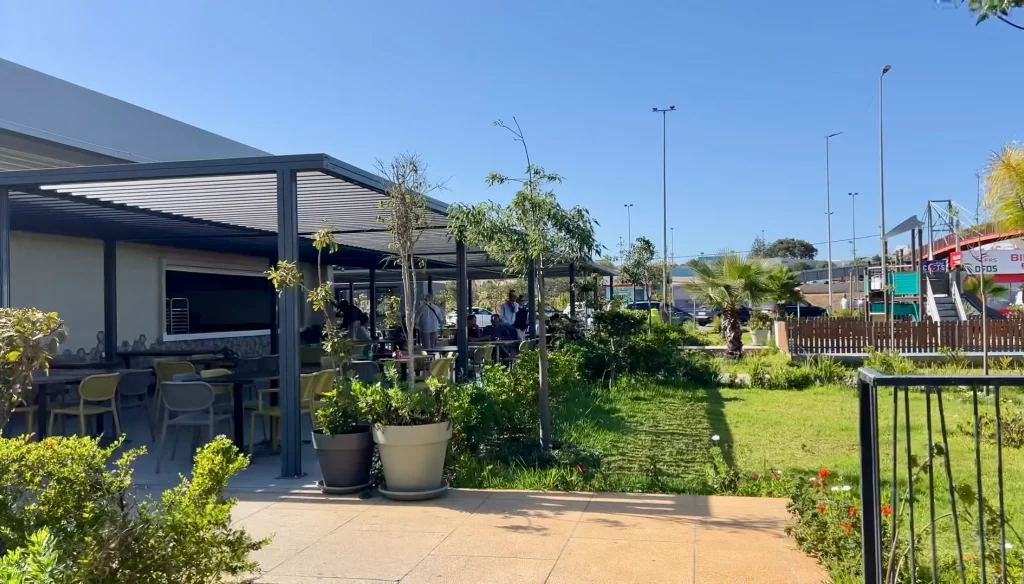
Highways (“autoroutes”) in Morocco have clean, well-equipped rest areas, even better than in Europe. Afriquia service station has a playground for kids, clean restrooms, a mosque, a small shop and a restaurant. And you can even expect the restaurant to have couscous on Friday as per tradition.
What are my Final Thoughts on Renting a Car in Morocco
Renting in Morocco can feel intimidating at first: the traffic, the roundabouts, the police checkpoints, the way everyone seems to invent their own lane. But once you get used to it, it’s one of the best ways to explore the country freely.
From the blue streets of Chefchaouen to the dunes of Merzouga, you’ll see sides of Morocco you’d completely miss on a guided tour or public transport.
If there’s one piece of advice I can give after years of road trips here, it’s this: take your time, stay calm, and never rush on Moroccan roads. Locals drive with confidence, and a bit of chaos, but they also expect others to do the same.
And I truly hope all the scratches I’ve got on my cars over the years (and all the lessons they came with!) help you have a smoother, safer, and much more enjoyable trip.