Disclosure: This article may contain affiliate links, which means I may earn a small commission at no extra cost to you. Thank you for helping me keep this blog going! 💛
Tangier is a city that never sits still. Situated on the edge of North Africa where the Mediterranean meets the Atlantic, it’s the closest part of Morocco to Europe, just one hour by ferry from Spain, and you can feel the influence in some parts of the city. Living here, I’ve watched travellers arrive expecting a quick stopover, only to fall in love with it, its old cafés, and the quiet charm of the Medina that still feels lived-in rather than Instagram-staged.
This guide brings together everything I’ve learned from exploring Tangier as a local, a traveller, and a mum. If you want to know when to visit, where to stay, what to do, what to avoid, how to get around, and how much things really cost in 2026, you’re in the right place.
Whether you’re here for one day or a week, Tangier offers a mix of history, beaches, nature, and culture that you won’t find anywhere else in Morocco (or perhaps Tetouan). And with this guide, you’ll experience it the way locals actually do.
Where Is Tangier Located and What Is Its Historical Background?
Where is Tangier located?
Tangier is located in northern Morocco at the Strait of Gibraltar, where the Mediterranean Sea meets the Atlantic Ocean. Spain is only 14 km away, making Tangier the closest Moroccan city to Europe. This strategic location shaped the city into a crossroads of trade, culture, and power.
A brief history of Tangier
Tangier began as a Phoenician trading post and later became the Roman city of Tingis. It was occupied by the Romans, Vandals, Byzantines, Spaniards, Portuguese and Brits. After the Islamic conquest, Andalusian Muslims and Jews fleeing Spain deeply influenced Tangier’s culture, architecture, and food.
The International Zone era
From 1923 to 1956, Tangier was an International Zone governed by several foreign powers. Writers, artists, diplomats, and spies passed through, giving Tangier its cosmopolitan reputation.
Tangier today
Modern Tangier is a fast-growing port city with high-speed trains, new infrastructure, and a relaxed atmosphere that still feels authentic.
When Is the Best Time to Visit Tangier?
Spring and autumn (best overall)
March–May and September–November offer mild temperatures, fewer crowds, and ideal conditions for sightseeing and walking. These are the months I always advised when asked about it. Also, note that March and November are a bit cold and more rainy. May, September and October are my favourite months; you get the right balance of temperatures and crowd.
Summer in Tangier
June–August is hot and windy. Beaches are popular, especially in July and August when locals holiday. Because the temperatures are lower than the rest of the country, and for the beaches, Tangier is one of the favourite destinations for Moroccans, so expect it to be crowded.
I always advise against going in July and August for the reasons above. But if it can’t be helped, then I would advise staying away from the city centre, the corniche and boulevards, as Moroccans go out at night, and it can be noisy. The traffic is dense with more accidents, and the beaches are crowded. And the prices go up too. For some businesses, summer is the time to make their earnings for the year.
But if you like things to be lively, then this is the time for you to go.
Winter and Ramadan
Winters are mild but windy and rainy. I only wear a jacket in the evening. If you come in winter, a jumper and a raincoat might be more useful. It’s also quiet and peaceful, as it is the least touristy season. During Ramadan, days are quiet and evenings are lively; visitors are still welcome. But many places are closed during the day or at the time of breaking the fast, especially outside the tourist spots.
How Do You Get to Tangier from Europe and Morocco?
Ferries from Spain
The fastest and most convenient ferry route is from Tarifa to Tangier Ville, arriving directly in the city centre. Ferries from Algeciras arrive at Tangier Med port, which is cheaper but requires an additional transfer into the city.
Flying to Tangier
Tangier Ibn Battuta Airport serves several European routes by low-cost airlines, and is located about 20 minutes from the city centre by taxi. Arrivals are generally smooth and well organised for international visitors.
Trains and buses within Morocco
The Al Boraq high‑speed train connects Tangier to Rabat and Casablanca comfortably. Long‑distance buses such as CTM and Supratours are also reliable for travellers moving around northern Morocco.
Where Should You Stay in Tangier?
Staying in the Medina
Staying inside the Medina is ideal for travellers who enjoy historical surroundings and short walking distances to major sights. Expect narrow streets, traditional riads and a lively neighbourhood atmosphere.
Marshan and the Kasbah area
Marshan is quieter and more residential, offering easy access to the Kasbah and several panoramic viewpoints like the famous cafe Hafa and the Phoenician tombs. The Kasbah is one of my favourite places with 3 museums within its walls. It suits travellers looking for calm evenings while remaining close to the old town.
City centre
The modern city centre is practical for longer stays and families, with supermarkets, cafés and wide streets. You’ll find great international options for food as well as easy access to the corniche. It also offers better access to public transport.
Malabata and Achakar
Malabata is best for beachfront hotels, modern apartments and hyped restaurants with easy access to Villa Harris museum and its park. Achakar is more rural and suits travellers who want easy access to beaches and nature, ideally with a car, as there aren’t many amenities around.
What Are the Best Things to Do in Tangier?
Nature and views
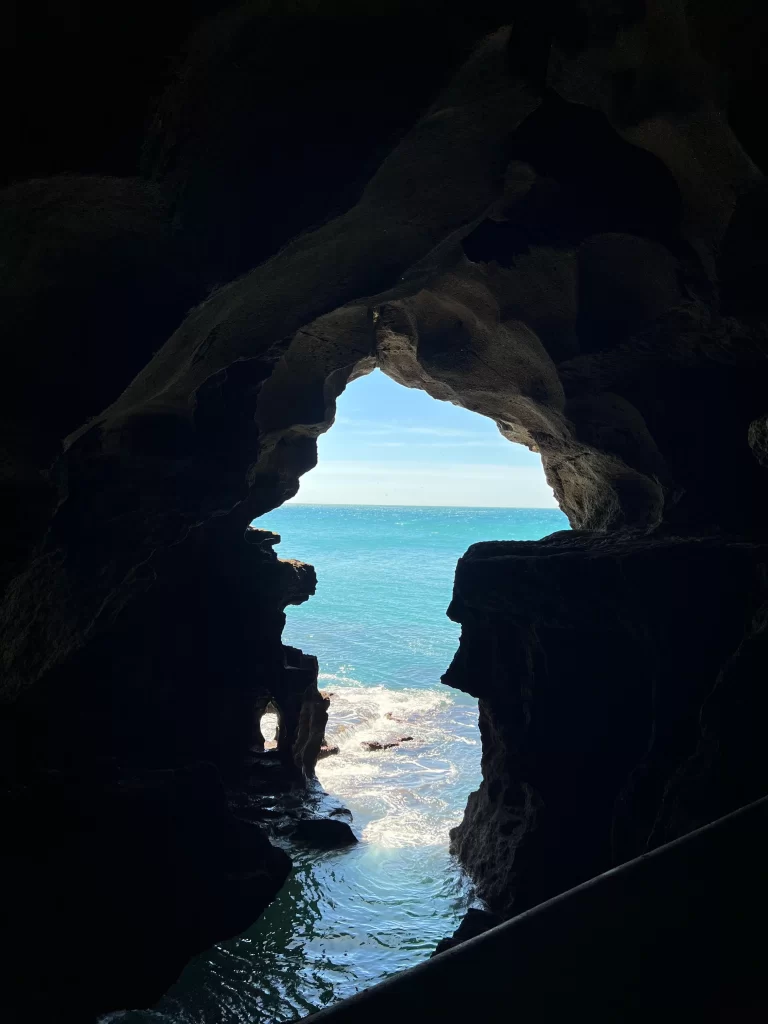
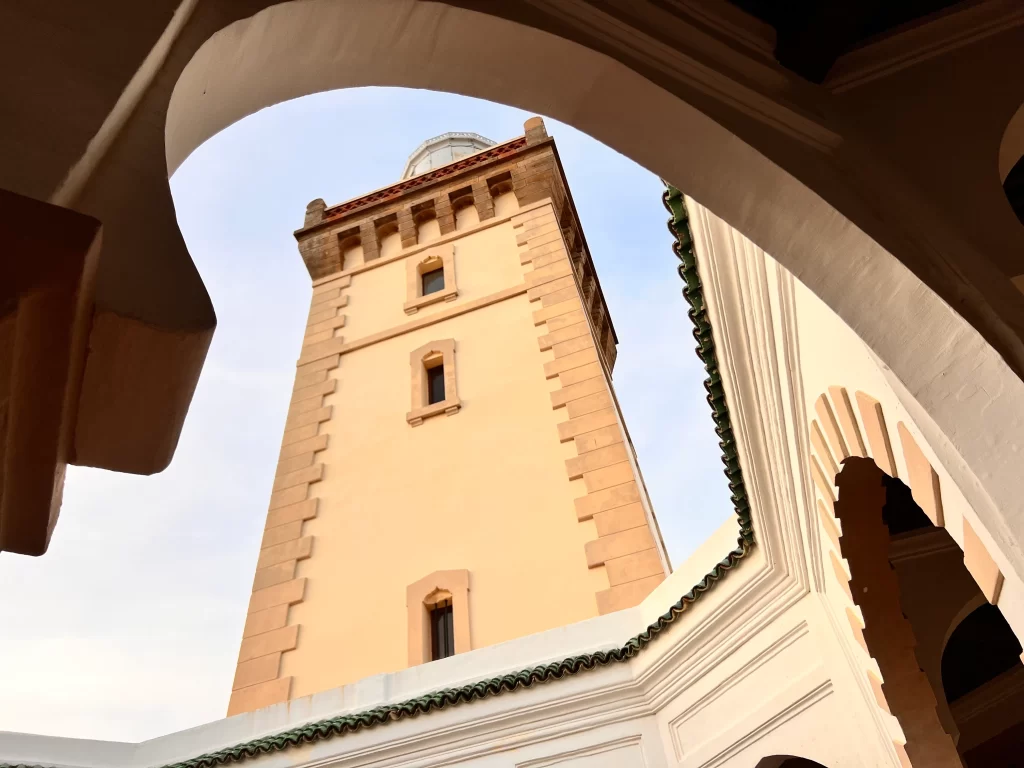
Cap Spartel has become a must-visit since it has been restored; it houses a beautiful garden and a museum. Hercules Caves, Perdicaris Park and the Corniche offer open space and coastal scenery that balance city exploration if you want to diversify your stay.
Explore the Kasbah
The Kasbah offers one of the clearest introductions to Tangier’s past. Walking along its walls provides wide views over the harbour and the Strait of Gibraltar. It’s home to 3 museums, including the Ibn Batutta Museum and the Kasbah Museum of Mediterranean Cultures. Grand Socco is only a 5-10-minute walk down the little alleys of the medina.
Wander the Medina
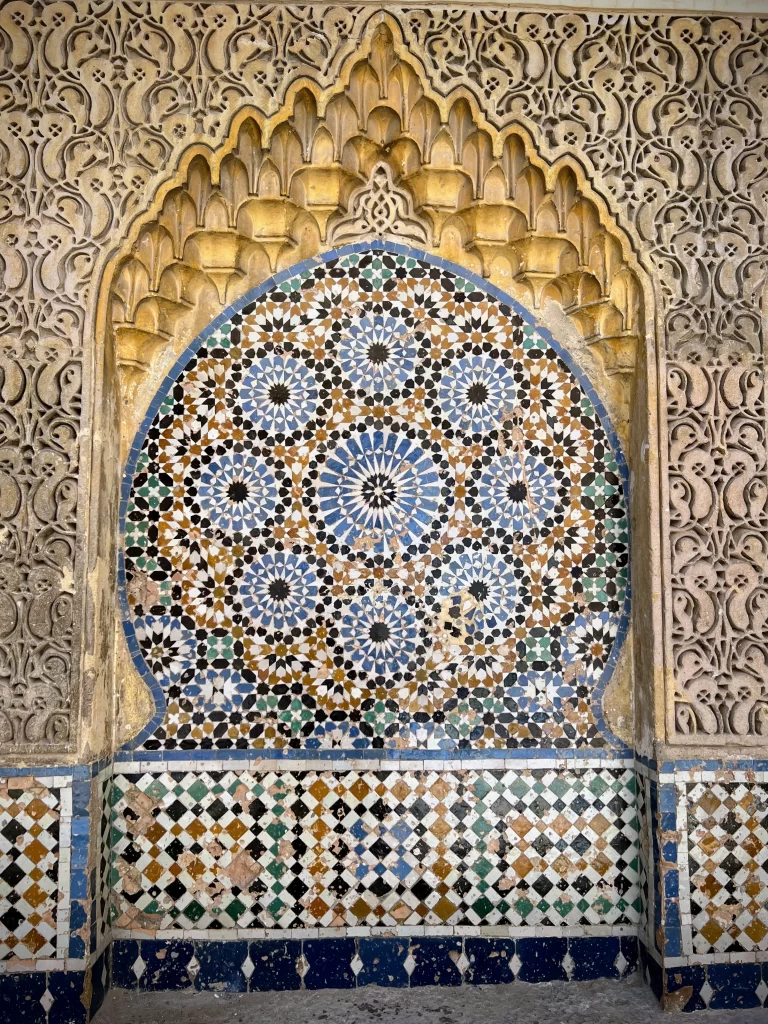
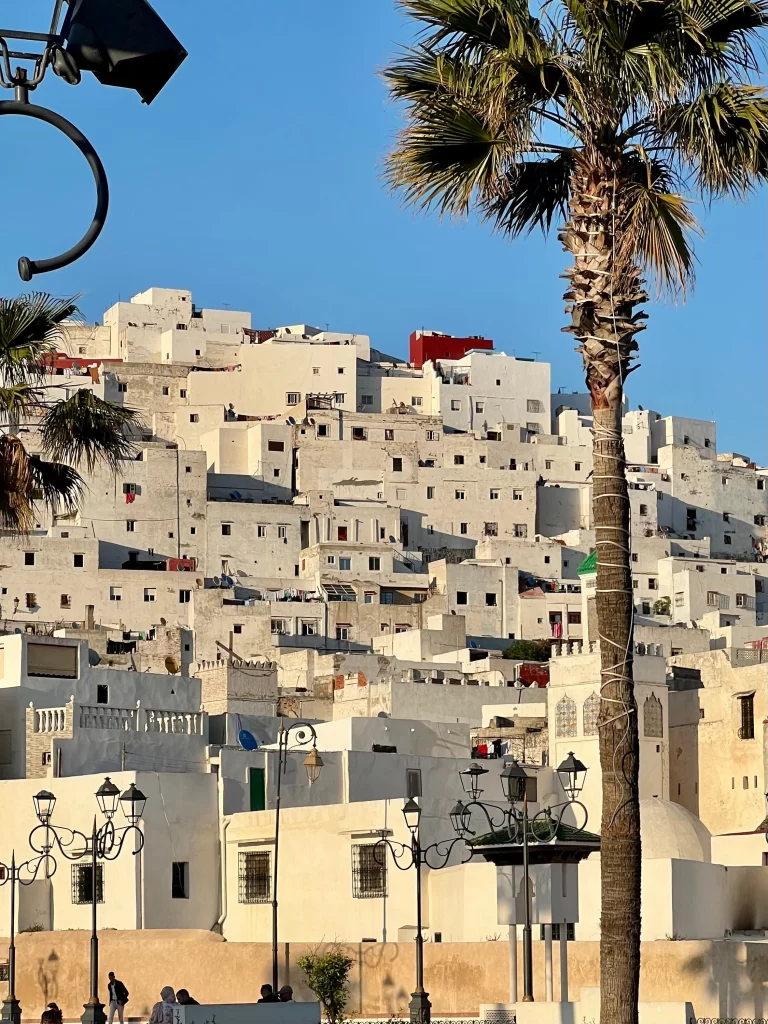
The Medina is best experienced slowly, without a strict route. It’s not a big medina, so you’re unlikely to get lost in it. It also has signs posted to find your way. Small bakeries, tailors and everyday shops create an authentic and lived‑in atmosphere.
You can visit Dar Niaba, the Museum of Travelling Artists, further down this street. When you realise the light emanated by the city, it is no surprise that so many artists came here for inspiration.
Visit key landmarks
The American Legation Museum, Grand Socco, Petit Socco and Ibn Battuta’s Museum provide useful historical and cultural context during a short visit. Ibn Battuta is our biggest Tangerine celebrity; many places are named after him. I think it should be mandatory to visit its museum, and I always bring my visitors to it.
How Many Days Do You Need in Tangier?
One day in Tangier
A single day allows you to explore the Medina, visit the Kasbah, enjoy a break at Café Hafa and walk along the Corniche or Villa Harris.
Two to three days
With additional time, you can include beaches, Cap Spartel and Hercules Caves, or plan a short regional day trip. I recommend using the “Tangier City Tour Bus Hop On – Hop Off” that allows you to cover the city and the coast as well as Perdicaris forest with a 48hrs tickets.
How Do You Get Around in Tangier?
Taxis and walking
Blue petit taxis are widely available and inexpensive, but you need to be prepared to wrestle to get one. People don’t really queue here, and they can take a maximum of 3 passengers. The positive side is that if you’re alone or two, you can share the taxi with others. We have this joke here: you don’t tell the taxi where to go, HE tells you where to go! Also, compared to Marrakech’s taxi reputation, I’ve never had any problem with a taxi here. They’ve always been polite and used the meter.
When I need to get somewhere at a specific time, I use Indrive. Now, Indrive isn’t regulated in Morocco, it’s not illegal either, but you should always use common sense and precautions when using it. For example, I always screenshot the driver and his car details to send them to someone. I also verify that it is the right driver and the right car; otherwise, I refuse to get in. They also ask you to sit at the front sometimes so that they don’t get harassed by the “petit taxi”; this is something I refuse to do. Until now, I have never had any problems.
Walking works best inside the Medina and the Kasbah and along the seafront promenade.
Public transport and cars
Local buses are affordable but difficult for first‑time visitors (I’m still looking for my local one). Renting a car offers flexibility for beaches, and if you want to visit nearby towns like Asilah or Tetouan. If you want to know more about it, you can check my guide on renting a car in Morocco.
Which Beaches in Tangier Are Worth Visiting?
Municipal Beach and Malabata Beach are easy to reach from the centre and popular with local families. I personally never go there because I don’t find them clean.
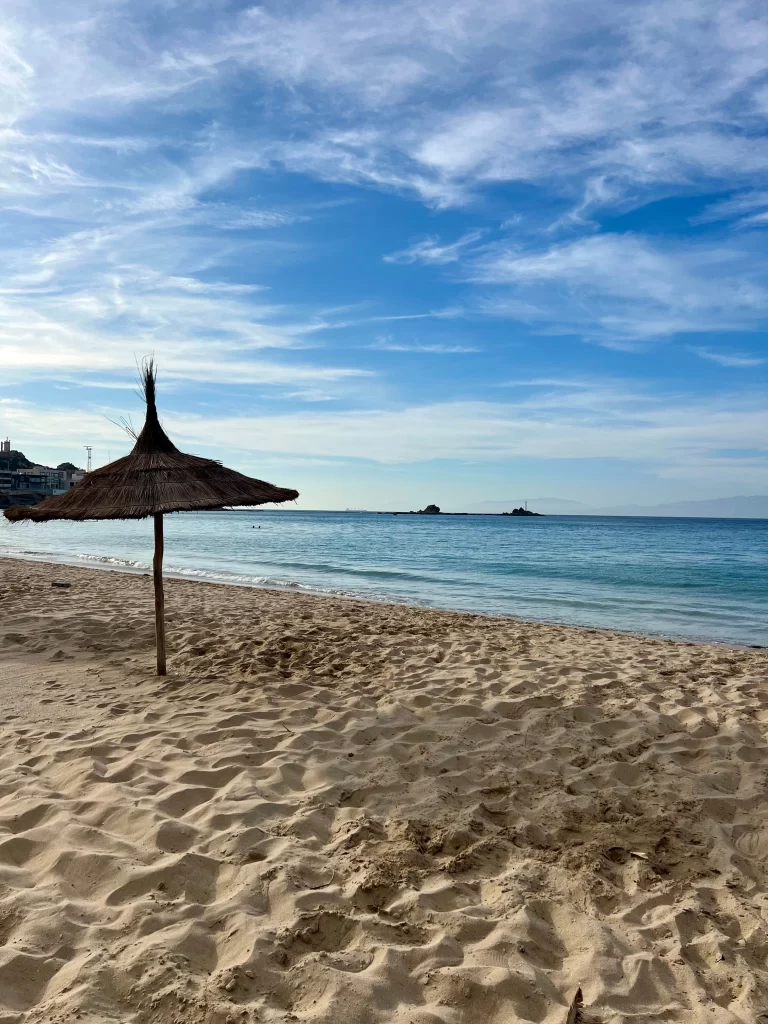
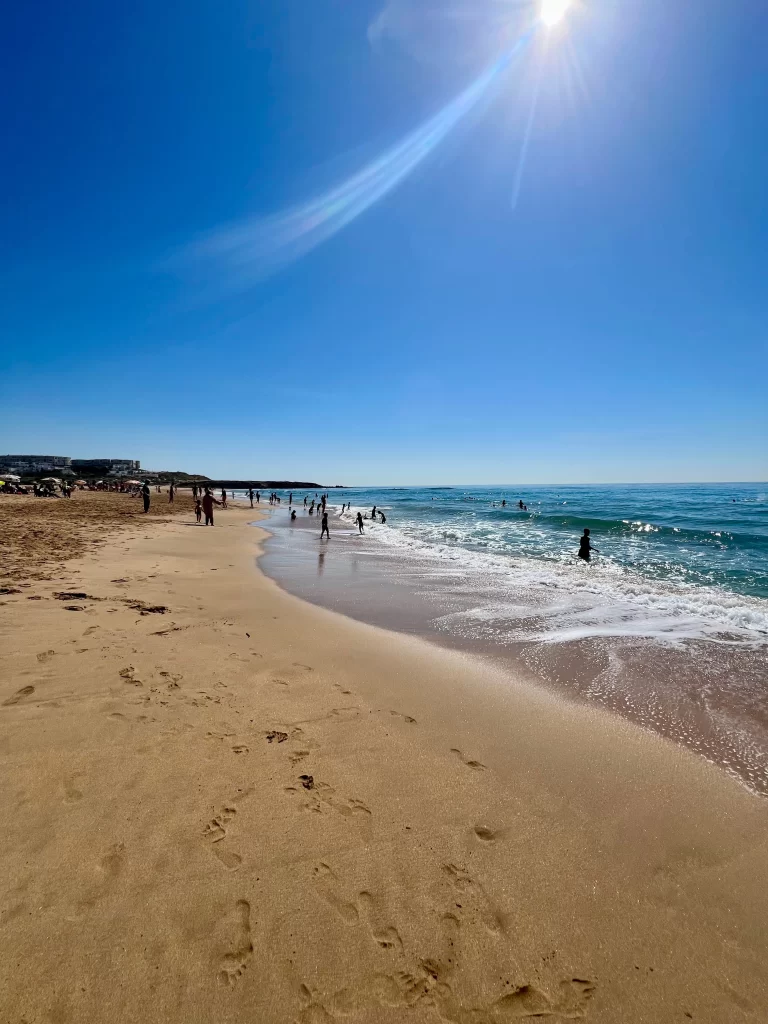
Achakar, Ba Kacem and Merkala offer cleaner surroundings, open space and a more relaxed coastal environment. Those are miles of beaches, so you have a lot of space if you want a spot away from everyone.
But you should keep in mind that this is the Atlantic Ocean, and the waves can be very rough. There are reports of drowning accidents every year. So, I only let my kids swim when there are lifeguards, which is from June to August only. And I try to educate my kids on the risks, as well as warn them not to copy what the bold local kids do.
You can rent chairs, umbrellas and tables too. Although the locals don’t like it because it’s not provided by the government, but rather a few men who are monetising on public space. If done sensibly, it can make everyone happy. It’s about 10 MAD per chair and table, more for loungers and umbrellas. We pay about 100-120 MAD for 4 of us with a table, umbrella and a mixture of loungers and chairs. Some will try to get 300-400 MAD from you. Just skip them and ask someone more honest.
If you don’t mind driving an hour, then Dalia Beach is the best beach around Tangier. It is on the Mediterranean coast, with soft sand, clear and calm water, and views over Spain.
What Are the Best Places to Eat in Tangier?
Moroccan food
Traditional tagines, couscous and pastries are the must try in Morocco.
In Tangier, Bissara is the local dish, a thick soup made of dried broad beans or dried peas. And the tea in the north is slightly different from the rest of Morocco. It is called chamali, served in large glasses with loads of sugar, and it’s my favourite.
For couscous, it’s a semolina-based dish with a stew over it. You have a choice to have chicken, lamb or vegetarian. It’s topped with caramelised onions, which makes it delicious. It is traditionally eaten on Friday. And most places will serve it here, even if Moroccan food is not their speciality. But they make it fresh for lunch only (after Friday prayer or Jumuah), so once they run out, they run out! And I would advise having it for lunch because it’s fresher. “Tocana” serves my favourite couscous so far, very flavourful and has an international menu if your children want something else.
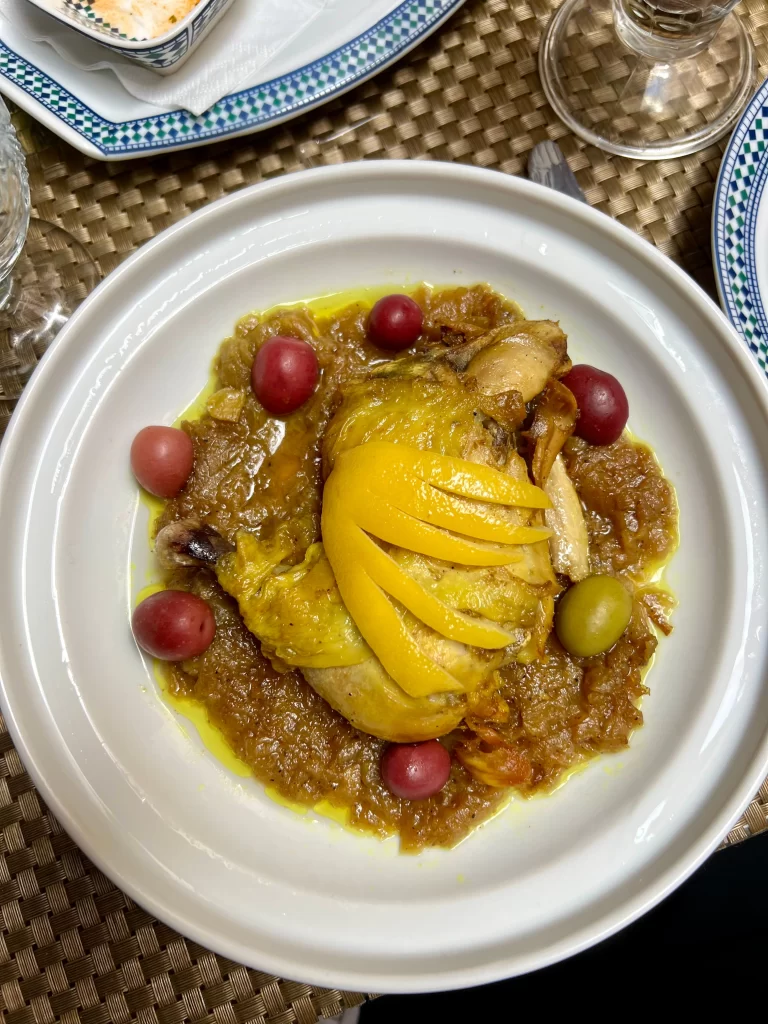
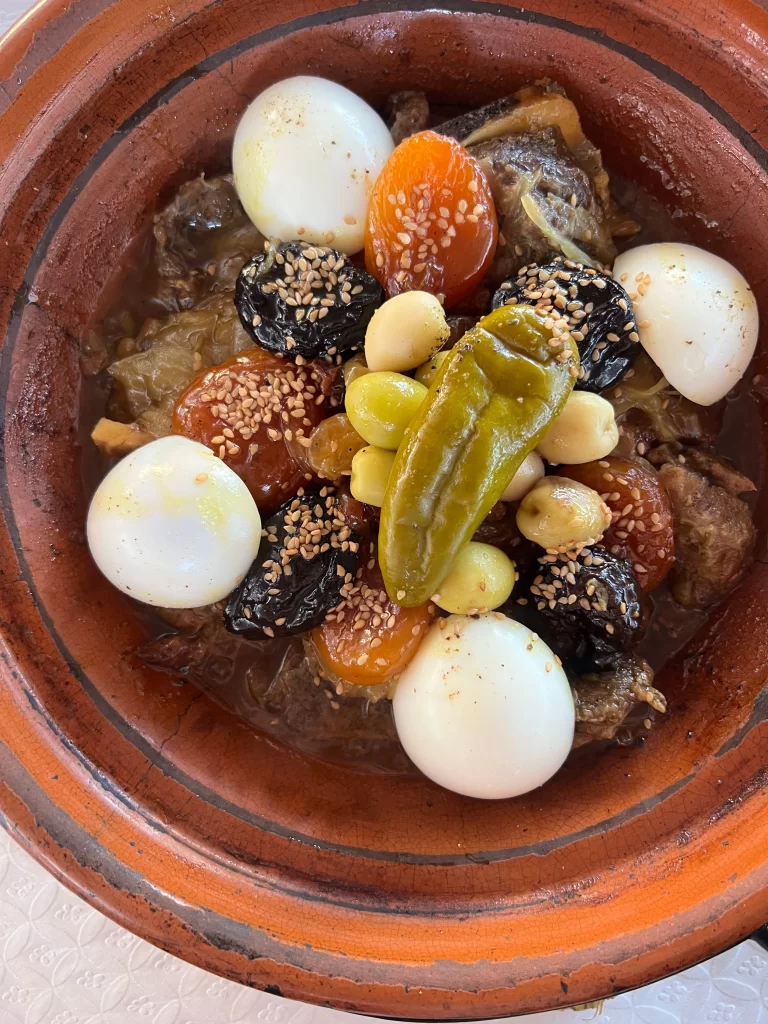
Tagines are simply stews slowly cooked in a clay pot. The most popular ones are chicken with preserved lemons, Lamb with prunes, and kefta (meatballs). My favourite is the lamb with prunes, which is sweet and savoury. “Ba Sidi” and “Zahia Palace” serve very good tagines in the medina.
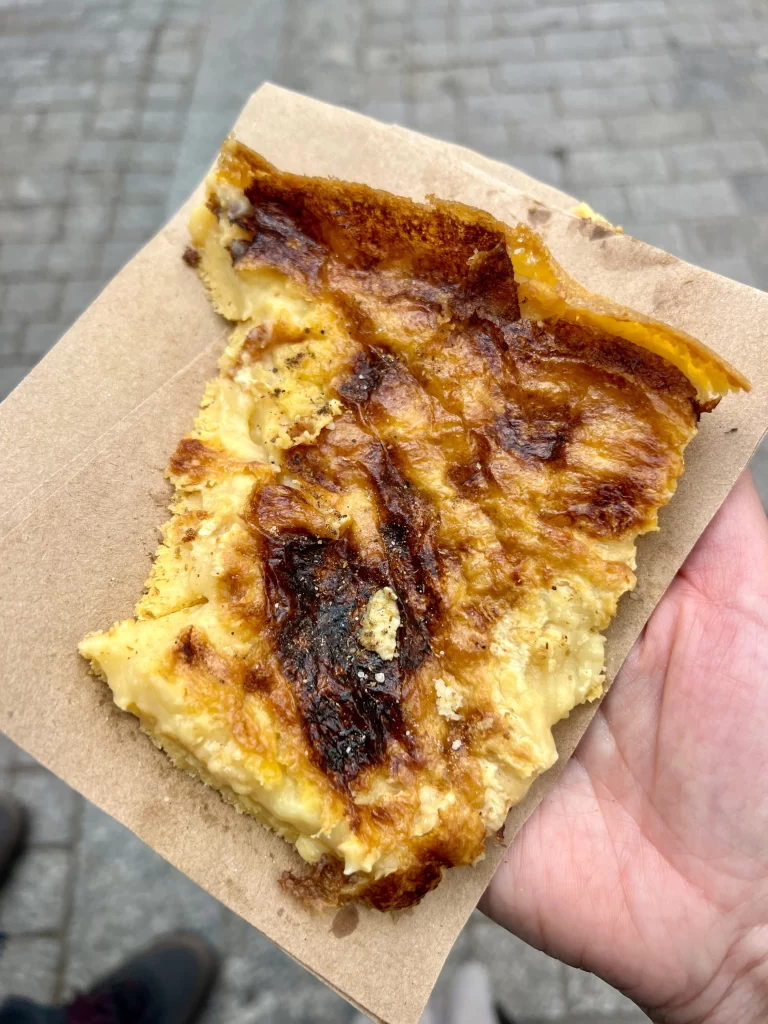
Make sure to stop to try the Calantika (chickpea flan) from a street cart, it’s usually near the “Mamounia” restaurant in Siaghine street. You can’t miss it, as there are always queues for it.
Seafood
Fresh seafood is widely available throughout the city. You should especially have some grilled sardines, which are probably the most consumed fish here. Fish restaurants are very popular here. “L’Aquarium Blue” has a comprehensive menu and fish tanks all around the restaurant. If you want to blend with the locals, you can head to the port, where there is a fish market with a few restaurants, all serving grilled fish. I found the latter to be too fishy taste-wise.
Cafés
You are spoiled for choice here. The most famous one, which everyone goes to, is “Café Hafa” in Marchan. It is old and has seen a multitude of celebrities drinking tea there. And it does serve a very good tea with great views of the sea. But it’s very hard to get a seat, especially at sunset. People will sit there for an hour waiting for the sunset, just drinking tea. And there is very little shade.
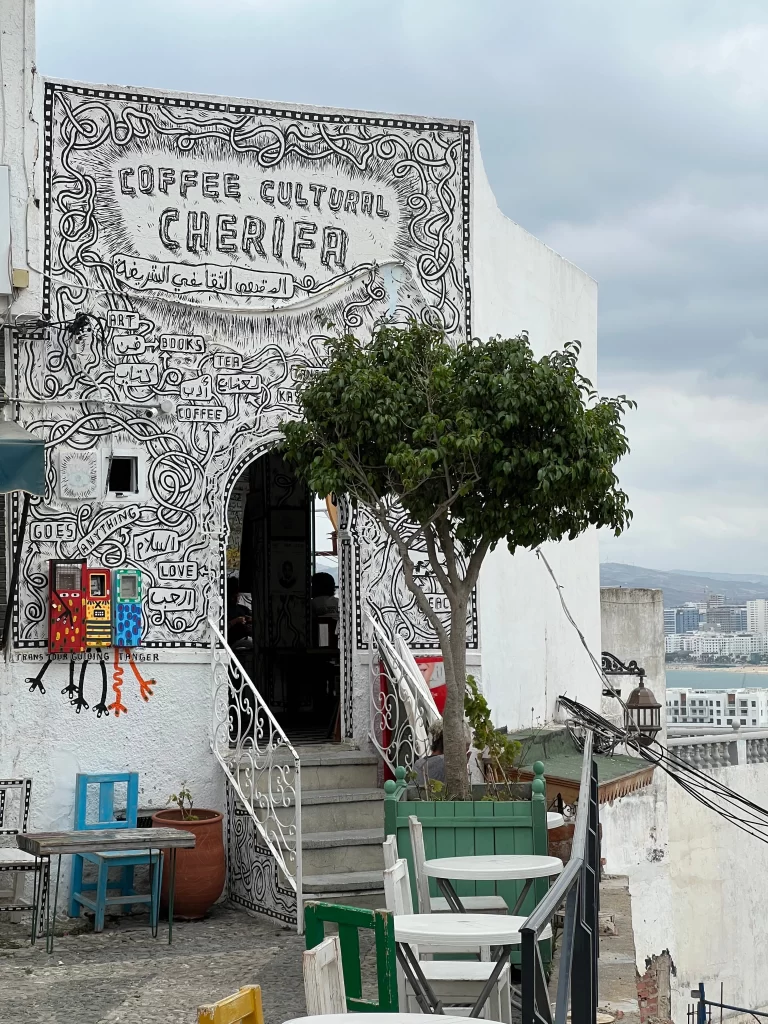
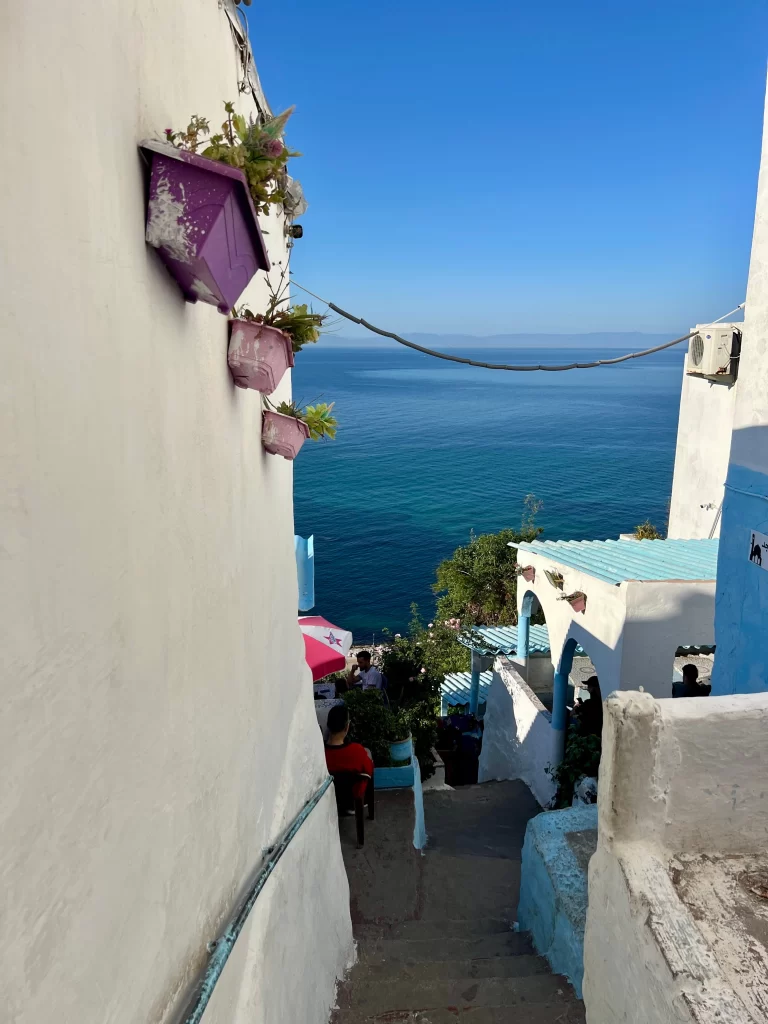
The Kasbah is very good for cafés with a view. “The Salon Bleu” is very popular. Only a few meters away, pass Bab el-Assa (bab is door), and you’ll find the artsy “Café Cultura Cherifa” which serves delicious mint tea.
And just around the corner from it is “Dar Chams Tanja”, which has adorned their terrace with carpets as you find in Turkey for the perfect Instagram picture with a view.
Dietary notes
Most food is halal by default, and vegetarian options are increasingly available across the city. If you’re health-conscious, then “Good Food Corner 2” is really good.
If you have allergies, choose your restaurants carefully, and make sure you communicate with the staff. A lot of the time, it just passes over their head. We had a guest with nut allergies once. We went to a reputable café, and we even communicated and insisted on the gravity of the allergy, but our guest still got an allergic reaction. Thankfully, we made it to the hospital in time. We figured out later that they didn’t separate or wash the ice cream scoop between servings, and the drink had been cross-contaminated.
What Can You Buy in Tangier?
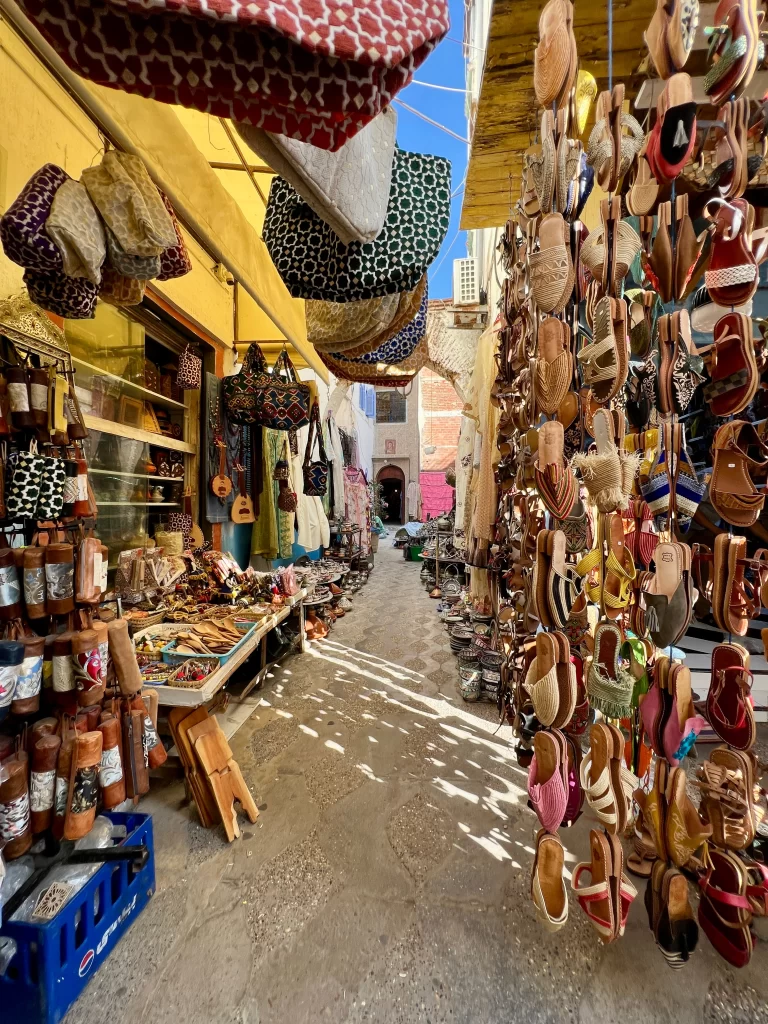
I usually go to the supermarket Marjane to get an idea about prices. Anything outside the supermarket should be cheaper. And make sure you bargain!
Traditional products
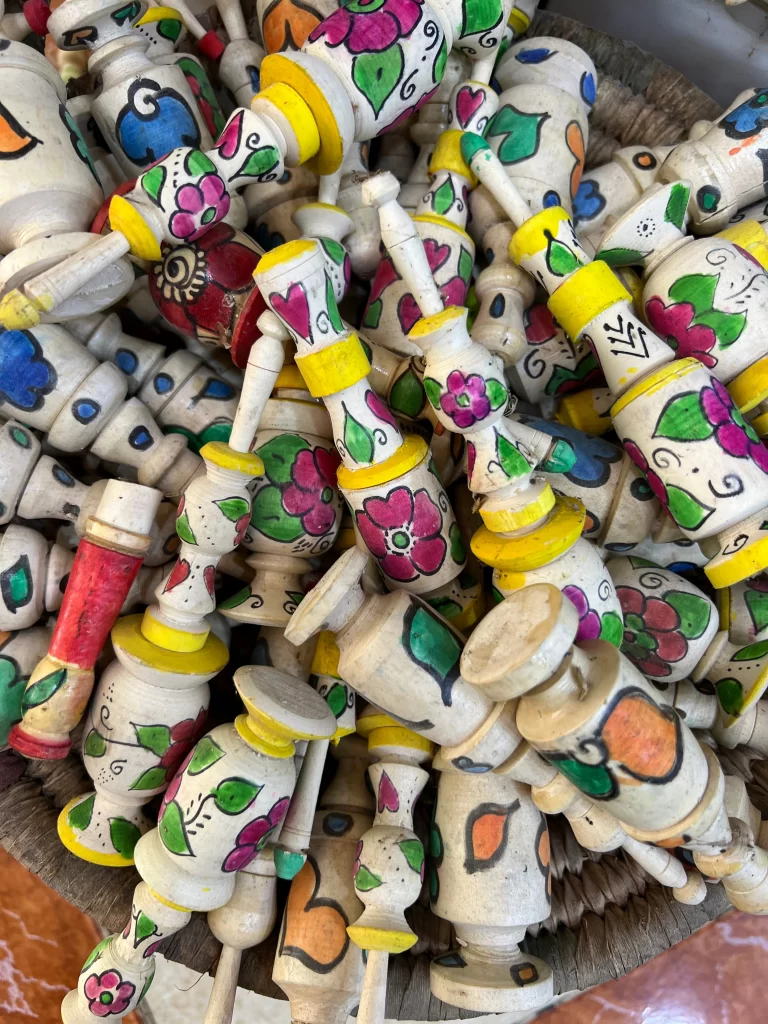
There is a wide range of traditional products to buy here, leather items, pottery, skincare, fashion and food.
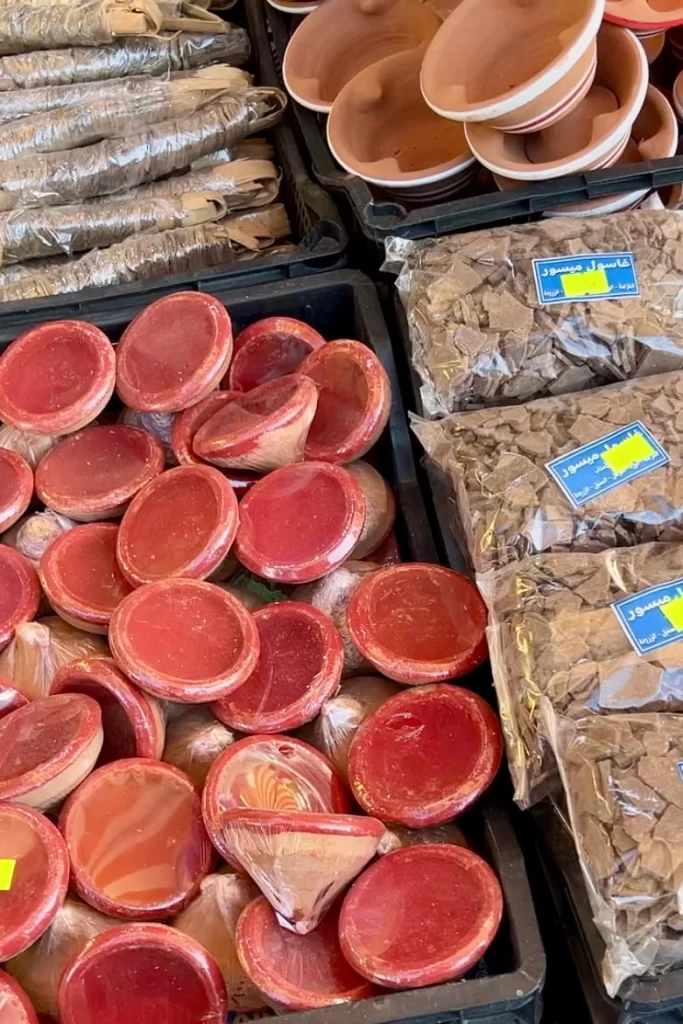
Skincare has become one of the most popular souvenirs sought after recently. The products I recommend that Moroccan women use are ghassoul, black soap, rose water, aker al fassi, nila powder, tbrima, khol, argan oil and prickly pear oil. Apart from argan oil and prickly pear oil, everything is relatively cheap.
For traditional clothes, you will find a kaftan and a djellaba for women and a gandoura and a djellaba for men. The prices differ depending on the quality. You can find the lowest quality gandoura for women for about 40 MAD and more fancy kaftans for around 600 MAD. For men, I would say around 200 MAD for a good gandoura.
You will see fake football jerseys that range between 100 and 150 MAD.
Leather items are more pricey, and the more popular items are bags, jackets and shoes.
As for food, Gazelle horns are the most popular pastry here, roughly costing 120-140 MAD per kilo. And try before you buy. Amlou is another popular product with tourists, it is made with almonds, argan oil and honey.
As for pottery, they come in all colours, shape and sizes! You’ll find the pottery from Fez is a bit different. It does look more refined and of a better quality, so usually more expensive.
Where to shop
There are a few supermarkets you can shop from in Tangier. They stock traditional products in summer and during Ramadan.
The medina sells about everything, but it is touristy, so it will be more expensive than the souk. Casabarata is the souk where the locals shop. You can find anything there, and it is very big, but if you want to shop like a local, then that’s the place to be. Note that it is partially closed on Friday.
If you travel between cities, you’ll find many stalls along the road, especially pottery ones, which are usually cheaper.
What Are the Best Day Trips from Tangier?
Popular day trips
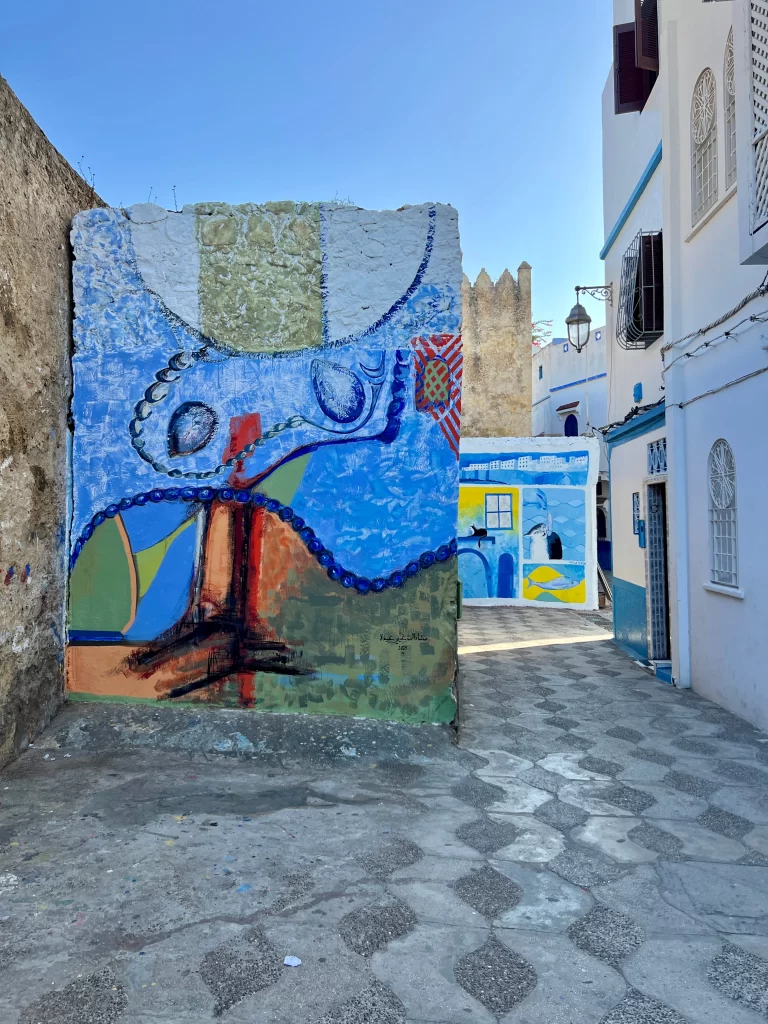
Asilah is only 45 mins scenic drive along the coast from Tangier. It is a small town, so you can explore the medina in just a few hours. The council organise an art festival every summer, where artists from around the world paint the walls of the medina.
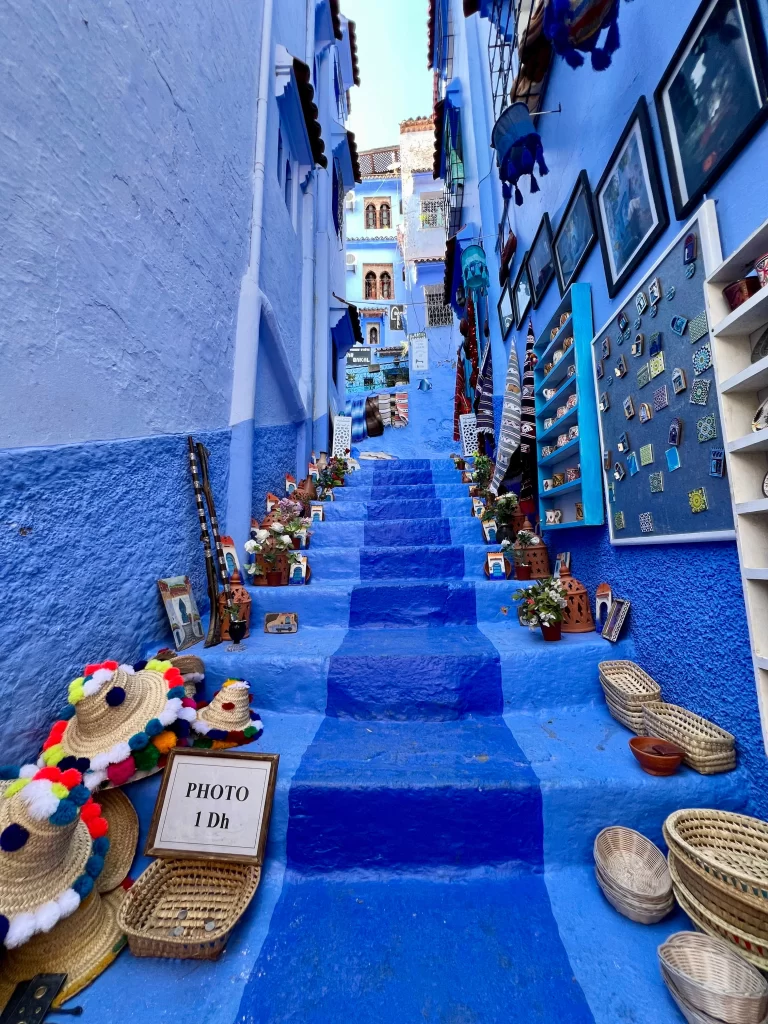
Chefchaouen is about 2 hours away, so you might want to stay the night, although we’ve only done day trips there. But it is worth it, the town is really beautiful and very touristy now.
Tetouan is an hour away and is even cleaner than Tangier. It is only 15 mins drive from the beach or the mountain, and the medina is a UNESCO World Heritage site. It is the most Spanish-looking city in Morocco.
Cross-border option
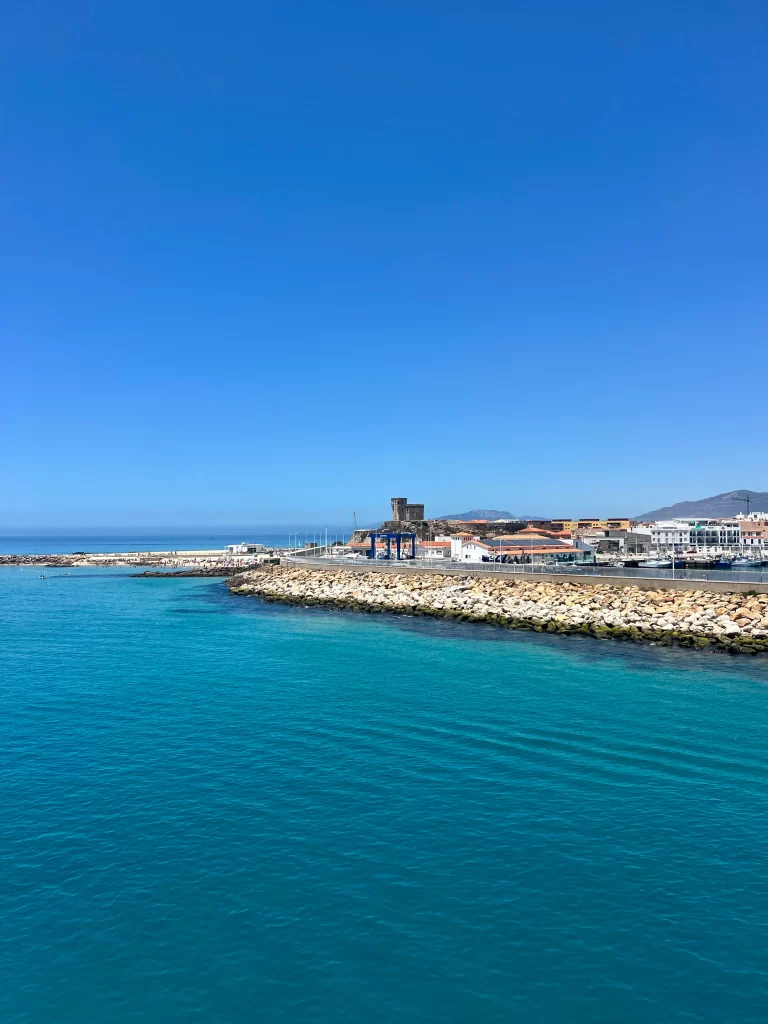
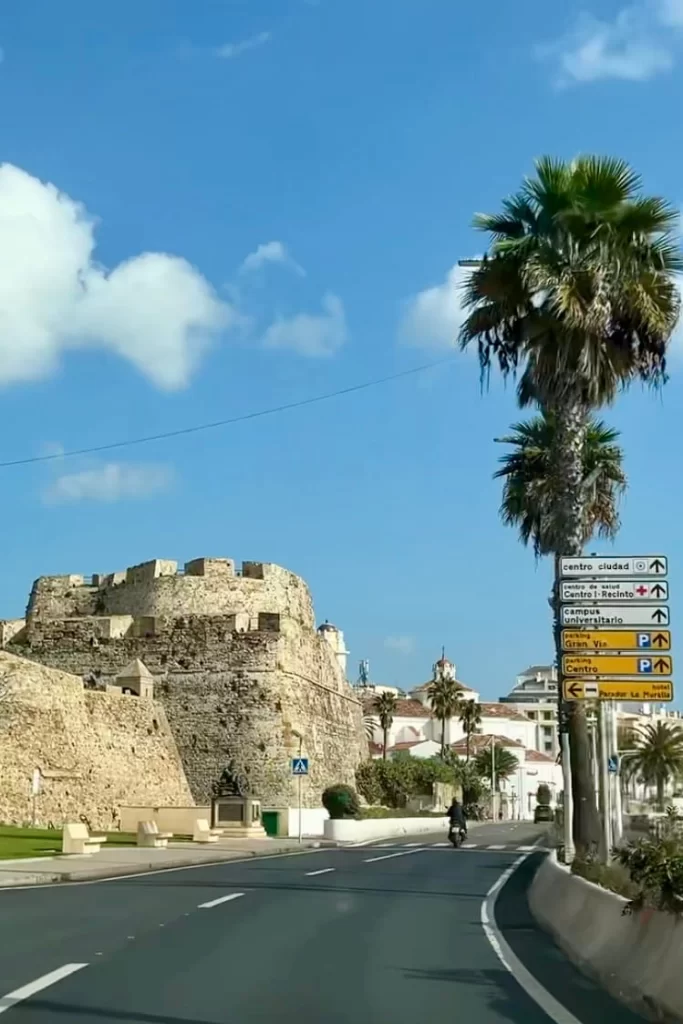
If you want to go all the way to Spain, Tarifa in southern Spain can be visited as a long day trip using the ferry. And Ceuta is about an hour from Tangier, if you go on a quiet day, you’ll have no queues at the border and pass in 10 mins. On the Spanish side, you can use a taxi or the bus.
Both Tarifa and Ceuta are small cities, so they are doable in a day each.
Is Tangier Safe for Tourists?
General safety
Tangier is considered safe for tourists, families and solo travellers. You obviously need to use common sense and be respectful. I would avoid areas like Beni Makada and Bir Chifa, but there is nothing to see there. In general, the west side of the FAR Avenue is safe.
Common sense tips
Keep personal belongings secure, use licensed taxis and avoid quiet areas late at night.
What Should You Pack for Tangier?
Clothing and essentials
Pack light layers, a windbreaker for coastal weather, modest clothing and comfortable walking shoes. The north of Morocco is generally more religiously conservative.
Beach and tech
Bring beachwear, sunscreen and a European power adapter for electronics. Do not underestimate the sun here; even if the breeze feels nice, the UV index is high here. I use sunscreen all year round.
What Are the Most Common Tangier Travel Mistakes to Avoid?
Planning mistakes
Many visitors book ferries to the wrong port or underestimate how windy the coastline can be.
On-the-ground mistakes
Overpaying for taxis and eating only in heavily touristic streets are common and easily avoided.
Tangier FAQ: What Else Do Travellers Ask?
Can you drink tap water in Tangier?
Tap water is generally safe for locals, but visitors are advised to drink bottled water to avoid stomach issues, especially during short stays.
Is English widely spoken in Tangier?
Basic English is commonly spoken in hotels, cafés and tourist areas. French and Spanish are still more widely used in everyday situations.
Do you need cash in Tangier?
Yes. Cash is still important for taxis, small shops and local restaurants. ATMs are widely available in the city centre.
Can you swim in Tangier safely?
Yes, but always follow beach flag warnings. Atlantic currents can be strong, especially at Achakar and Merkala.
Is Tangier suitable for families with children?
Yes. Tangier is relaxed, walkable in many areas and has parks, beaches and cafés that are very family-friendly.
How many days should you stay in Tangier for a first visit?
Two to three days is ideal for most travellers.